Express News ServiceFirst Published : 24 Jan 2010 10:11:00 AM ISTLast Updated : 24 Jan 2010 01:46:14 PM IST
THIRUVANANTHAPURAM: While busy analysing why Malayalam films missed out on the big awards in the National Film Award category, a group of Malayalis are wondering why they are not being counted - the crew of the Kokborok film `Yarwng’ which won the national honour (award for the best film in each of the language not included in Schedule VIII of the Constitution). In addition to its director Fr Joseph Pulinthanath, `Yarwng’, which means `roots’, has a bunch of Malayalis associated with it - cameraman Kannan, sound recordist Krishna Kumar, associate cameraman Shaji Pattanam, Krishnan Unni who does sound mixing, editor Sasi Menon and Mahesh Narayanan, associate director Sajiv Pazhoor and producer Fr K Joseph.
“It is a big honour. We all are very happy about it,’’ Fr Joseph Pulinthanath, a Malayali priest now settled in Assam. The Kokborok tribe in Tripura has been neglected for long and the film gave a new identity, an unprecedented one, for the tribe and the language. The 60-member crew braved several odds to make the film happening, the second one from the director in the language, the first being `Mathia’. ‘Yarwng’ is the second feature film of Don Bosco Sampari Pictures Tripura.
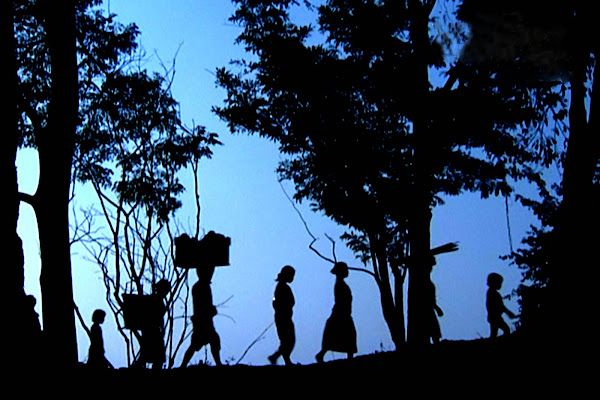
The story of the 95-minute feature film revolves round the large-scale displacement which happened in Tripura when the newly-built Dumbur dam submerged huge areas of arable land in the fertile Raima valley about 30 years ago. The lead actors of Yarwng are Meena Debbarma, Nirmal Jamatia and Sushil Debbarma.
The film is about the romance between Karmati and Wakhiri. On the eve of their marriage, the dam submerges the entire village and separates them. ‘Yarwng’ was shot on actual locations like Bolongbasa and adjoining areas and many of the people who act in the film are real life victims of displacement.
http://www.expressbuzz.com/edition/story.aspx?title=Strong%20Malayali%20crew%20in%20award-winning%20film&artid=4kHd8FjvNRE=&type=
Wednesday, January 27, 2010

Bollywood returns to Russian screens
September, 10 2009
Oxana Naralenkova, RIR
Cinema: Indian films remain popular in post-Soviet times
Indian films are returning to Russian cinemas. As part of the Year of India in Russia, a series of major film events are including Indian film festivals. The exhibition “The History of Indian Cinema (Bollywood)” will also take place in various Russian cities.
The first screenings took place at the 31st Moscow International Film Festival. An Indian week was also part of the 14th St Petersburg International Film Festival in June.
Films included the drama Yarwng, shot in the indigenous Kokborok tribal language by Catholic priest Father Joseph Pulinthanath; the first film directed by Bollywood star Aamir Khan, Like Stars On Earth, which was India's official entry to The Oscars; Four Chapters from young Calcuttan director Suman Mukhopadhyay; Priyadarshan’s The Wedding Sari; Indian James Bond; and Fashion from leading Indian director Madhur Bhandarkar.
In addition, retrospective screenings were held of films by the famous Indian director Shyam Benegal, member of the jury at the 31st Moscow International Film Festival.
The Russian passion for Indian films, born in the USSR, continues to grow in the modern day.
It was in the 1950s that Soviet moviegoers first discovered “the distant India of miracles”.
When Indian Prime Minister Jawaharlal Nehru visited the Soviet Union in 1955, his photograph was everywhere – in shop windows, on streets and at intersections. Thousands of people lined up for tickets to be the first to see Indian films and the striking, colourful performances of Indian dancers and musicians. Indian actor Raj Kapoor, who came to Moscow around the same time, left the Soviet people literally besotted. According to eyewitnesses, Kapoor’s shiny ZIS (the grand-style Soviet automobile meant to ferry the actor back to his hotel), which was parked outside the Udarnik movie theatre, never left the curb. The crowd simply picked the car up (with Kapoor in it) and carried it off.
Then came the Indian saga about twin sisters, Seeta Aur Geeta (1972), a marvelous reminiscence of distant childhood. Children in Moscow courtyards tried to repeat the circus tricks of the brave heroine, Hema Malini. They copied her tightrope act and her daring manner of behaviour and speech. Indian cinema fans here still remember how one of the twins taught her wicked aunt a lesson. Songs from Indian movies were especially popular in the Soviet Union in the 1980s. The fashion for disco dancing forced young Russians to view Indian cinema differently after the appearance of Disco Dancer (1982). The rags-to-riches story of an ordinary young Indian boy who manages to become a famous singer once again staggered the imagination of Soviet moviegoers. Mithun Chakraborty, the film’s star, replaced Raj Kapoor in the eyes of the new generation. Disco Dancer earned close to 60 mn roubles at a time when movie tickets cost 20-50 kopecks. The dance halls at Soviet summer resorts in the ‘80s resounded with the sounds of “I Am a Disco Dancer”. Some fanatics were capable of requesting the song ten times over.
After 1979, the year of the joint Soviet-Indian film The Adventures of Ali Baba and the Forty Thieves, new Indian films began to be distributed in the USSR every month – this at a time when the number of movies imported from capitalist countries did not exceed 40 per year.
Who of the newest generation of Indian actors is loved in Russia today? The answer would probably be the strikingly beautiful Aishwarya Rai (“rai” in Russian means “paradise”). Even her last name sounds magical to the Russian ear, paradise being “a place of eternal bliss for the souls of the righteous”. True, Miss Rai is best known to Russians, as with residents of other countries, for her work in Hollywood films. Bride and Prejudice (2004), Mistress of Spices (2005) and The Last Legion (2007) are the films featuring Rai shown most often on Russian television. Meanwhile, Russia continues to love Indian cinema classics from the 1960s and 1970s.
These are the films most talked about on Internet forums, where fans lovingly collect photographs and stories of their idols. They constitute a retrospective of Indian cinema that is regularly shown on Russian television, especially the Domashny channel, which is aimed at women and promotes family values. For Russian fans of Indian films, there is even a special satellite channel called India TV. Russia’s love of Indian films has now spilled over into a mass passion for Indian dance. Every self-respecting sports club in Moscow teaches yoga and the art of Indian dance. Russian girls array themselves in saris for these lessons, which are more popular even than traditional European fitness classes.
http://rbth.ru/articles/2009/09/10/100909_bollywood.html
Oxana Naralenkova, RIR
Cinema: Indian films remain popular in post-Soviet times
Indian films are returning to Russian cinemas. As part of the Year of India in Russia, a series of major film events are including Indian film festivals. The exhibition “The History of Indian Cinema (Bollywood)” will also take place in various Russian cities.
The first screenings took place at the 31st Moscow International Film Festival. An Indian week was also part of the 14th St Petersburg International Film Festival in June.
Films included the drama Yarwng, shot in the indigenous Kokborok tribal language by Catholic priest Father Joseph Pulinthanath; the first film directed by Bollywood star Aamir Khan, Like Stars On Earth, which was India's official entry to The Oscars; Four Chapters from young Calcuttan director Suman Mukhopadhyay; Priyadarshan’s The Wedding Sari; Indian James Bond; and Fashion from leading Indian director Madhur Bhandarkar.
In addition, retrospective screenings were held of films by the famous Indian director Shyam Benegal, member of the jury at the 31st Moscow International Film Festival.
The Russian passion for Indian films, born in the USSR, continues to grow in the modern day.
It was in the 1950s that Soviet moviegoers first discovered “the distant India of miracles”.
When Indian Prime Minister Jawaharlal Nehru visited the Soviet Union in 1955, his photograph was everywhere – in shop windows, on streets and at intersections. Thousands of people lined up for tickets to be the first to see Indian films and the striking, colourful performances of Indian dancers and musicians. Indian actor Raj Kapoor, who came to Moscow around the same time, left the Soviet people literally besotted. According to eyewitnesses, Kapoor’s shiny ZIS (the grand-style Soviet automobile meant to ferry the actor back to his hotel), which was parked outside the Udarnik movie theatre, never left the curb. The crowd simply picked the car up (with Kapoor in it) and carried it off.
Then came the Indian saga about twin sisters, Seeta Aur Geeta (1972), a marvelous reminiscence of distant childhood. Children in Moscow courtyards tried to repeat the circus tricks of the brave heroine, Hema Malini. They copied her tightrope act and her daring manner of behaviour and speech. Indian cinema fans here still remember how one of the twins taught her wicked aunt a lesson. Songs from Indian movies were especially popular in the Soviet Union in the 1980s. The fashion for disco dancing forced young Russians to view Indian cinema differently after the appearance of Disco Dancer (1982). The rags-to-riches story of an ordinary young Indian boy who manages to become a famous singer once again staggered the imagination of Soviet moviegoers. Mithun Chakraborty, the film’s star, replaced Raj Kapoor in the eyes of the new generation. Disco Dancer earned close to 60 mn roubles at a time when movie tickets cost 20-50 kopecks. The dance halls at Soviet summer resorts in the ‘80s resounded with the sounds of “I Am a Disco Dancer”. Some fanatics were capable of requesting the song ten times over.
After 1979, the year of the joint Soviet-Indian film The Adventures of Ali Baba and the Forty Thieves, new Indian films began to be distributed in the USSR every month – this at a time when the number of movies imported from capitalist countries did not exceed 40 per year.
Who of the newest generation of Indian actors is loved in Russia today? The answer would probably be the strikingly beautiful Aishwarya Rai (“rai” in Russian means “paradise”). Even her last name sounds magical to the Russian ear, paradise being “a place of eternal bliss for the souls of the righteous”. True, Miss Rai is best known to Russians, as with residents of other countries, for her work in Hollywood films. Bride and Prejudice (2004), Mistress of Spices (2005) and The Last Legion (2007) are the films featuring Rai shown most often on Russian television. Meanwhile, Russia continues to love Indian cinema classics from the 1960s and 1970s.
These are the films most talked about on Internet forums, where fans lovingly collect photographs and stories of their idols. They constitute a retrospective of Indian cinema that is regularly shown on Russian television, especially the Domashny channel, which is aimed at women and promotes family values. For Russian fans of Indian films, there is even a special satellite channel called India TV. Russia’s love of Indian films has now spilled over into a mass passion for Indian dance. Every self-respecting sports club in Moscow teaches yoga and the art of Indian dance. Russian girls array themselves in saris for these lessons, which are more popular even than traditional European fitness classes.
http://rbth.ru/articles/2009/09/10/100909_bollywood.html
Buddhadev opens national film fete
Kozhikode, Aug 4 : Eminent Director Buddhadev Dasgupta inaugurated the sixth edition of the National Film Festival of Kerala (NFFK) here.
Besides inaugural Bengali film ''Ami, YasinAr Amar Madhubala/The Voyeurs,'' by eminent diector Buddhadev Dasgupta, altogether 16 films would be screened in the three-day event to be held in three categories -- Malayalam Cinema, NFDC section and Indian Cinema.
Some of them were ''Mirch Masala'' by Ketan Mehta, ''Kanchivaram'' by Priyadarsan, "Yarwng Roots" by Joseph Pulinthanath sdb, ''Ganashatru'' (Public Enemy) by Satyajit Ray, ''Vilapangalkkappuram'' by T V Chandran, ''Bara Aana'' by Raja Menon, ''Mammoo'' by Shyam Bengal, Bioscope by K M Madhusudhanan and ''Firaq'' by Nandida Das.
The programme inaugorated yesterday evening was being organised by the Kerala State Chalachitra Academy.
--UNI
http://www.newkerala.com/nkfullnews-1-85606.html
Besides inaugural Bengali film ''Ami, YasinAr Amar Madhubala/The Voyeurs,'' by eminent diector Buddhadev Dasgupta, altogether 16 films would be screened in the three-day event to be held in three categories -- Malayalam Cinema, NFDC section and Indian Cinema.
Some of them were ''Mirch Masala'' by Ketan Mehta, ''Kanchivaram'' by Priyadarsan, "Yarwng Roots" by Joseph Pulinthanath sdb, ''Ganashatru'' (Public Enemy) by Satyajit Ray, ''Vilapangalkkappuram'' by T V Chandran, ''Bara Aana'' by Raja Menon, ''Mammoo'' by Shyam Bengal, Bioscope by K M Madhusudhanan and ''Firaq'' by Nandida Das.
The programme inaugorated yesterday evening was being organised by the Kerala State Chalachitra Academy.
--UNI
http://www.newkerala.com/nkfullnews-1-85606.html
From berets to Balibo: Brisbane’s feast of film
REVIEW, AUSTRALIA
Preview by Paul Benedek
26 July 2009
(Extract)
In the year of the brilliant Samson and Delilah, BIFF will bring a stream of films by or about Indigenous people, called Colourise films.
These include The Inheritors, which documents rural Mexico, capturing the dignity and humanity of people in the face of incredible exploitation. Both Roots and Birdwatchers tell a universal story of displacement from land and culture.
In the case of Roots, people are uprooted by the construction of the Dumbur Dam in India, which submerged huge areas of fertile land.
In Birdwatchers, a once proud Indigenous community in Brazil is broken up and forced to live on small allotments amid cattle ranches. Filmmakers and thinkers will discuss the issues of these films at the Colourise BIFF seminar.
BIFF promises to be ten days of intense, rewarding film experiences — see you in the theatres.
http://www.greenleft.org.au/2009/804/41356
Preview by Paul Benedek
26 July 2009
(Extract)
In the year of the brilliant Samson and Delilah, BIFF will bring a stream of films by or about Indigenous people, called Colourise films.
These include The Inheritors, which documents rural Mexico, capturing the dignity and humanity of people in the face of incredible exploitation. Both Roots and Birdwatchers tell a universal story of displacement from land and culture.
In the case of Roots, people are uprooted by the construction of the Dumbur Dam in India, which submerged huge areas of fertile land.
In Birdwatchers, a once proud Indigenous community in Brazil is broken up and forced to live on small allotments amid cattle ranches. Filmmakers and thinkers will discuss the issues of these films at the Colourise BIFF seminar.
BIFF promises to be ten days of intense, rewarding film experiences — see you in the theatres.
http://www.greenleft.org.au/2009/804/41356
Yarwng at Moscow International Film Festival 19.06. - 28.06.2009
Contemporary Indian Cinema
Yuri Korchagov
Indian cinema is getting back on the program of the Moscow International Film Festival. Hopefully this is not episodic (in Russia 2009 has been proclaimed the Year of India). It is common knowledge that India holds the first place in the world in the number of films produced and the second (after China) in population. Though Indian movies do not always live up to the expectations of foreign and – let us be honest – home viewers, yet out of the general subcultural output (about 1 thousand 1 hundred movies a year bring in 2 billion dollars) one can always pick certain movies which are unusual in content and form and which do not comply with the familiar general idea of present-day Indian cinema. One example is the low-budget drama “Yarwng/Roots” shot by a Catholic priest father Joseph Pulinthanath in the language of the Kokborok tribe. It is on our program of modern Indian cinema.
Next to it are the well-known films which have received wide acclaim not only in India, but worldwide. Directorial debut of the number one star of Indian cinema Aamir Khan “Taare Zameen Par/Stars On Earth” is just one example. In Russia Aamir, who debuted in 1988 in a very successful movie “Qayamat Se Qayamat Tak”, is a well known actor. Movie stars do not always make good directors but Aamir outdid himself. His movie “Taare Zameen Par” where he is an actor, director and producer was nominated for the 2007 “Oscar”, was successfully screened in many countries of the world, and won many prizes at international festivals.
Traditionally powerful dramatic storylines are represented by “Chaturanga/Four Chapters” and “Kanchivaram/A Communist Confession”. The young director from Calcutta Suman Mukhopadhyay painstakingly recreates the almost 100-year-old novel “Four Chapters” by the Nobel Prize winner Rabindranath Tagore (whose works were brought to the screen several times turned by such Bengali directors as Satyajit Ray and Tapan Sinha). S. Priyadarshan from Madras (currently Chennai) is well-known to the Indian and Russian audience. Some of his films shot in Hindi were shown on TV and were released on video. The director shot “Kanchivaram” in his native Tamil language. Through the prism of time (the action is set in colonial India) Priyadarshan looks at the life and customs of Indian weavers, whose homemade sari are unparalleled in the world.
Program of contemporary Indian cinema would be incomplete without the Indian entertaining box-office cinema. The director K.Vishnuvardhan started his cinematic career as an actor, worked as an assistant to leading Indian directors Santosh Sivan, Mani Ratnam and Ramgopal Varma. His well-made thriller “Billa” (2007) released in Tamil by Madras studio (currently Chennai) was shot in Kuala Lumpur (Malaysia). It is a remake of “Don” movie (2006, director Farhan Akhtar) made in Bollywood in 2006.
Film “Fashion” of the leading Indian director Madhur Bhandarkar is being screened in the opening of the Contemporary Indian Cinema. Directors of other countries have also shown their interest in the magic of the fashion business. For example, film “Gloss” (director Andrey Konchalovsky) was released in Russia. His view of the world of fashion as a sticky spider web from which one cannot escape without losing one’s self-respect to a large extent is similar to the views of Madhur Bhandarkar. His supermodels either leave this world forever or become soulless dolls.
http://www.moscowfilmfestival.ru/eng/31/program/3114/about/
Yuri Korchagov
Indian cinema is getting back on the program of the Moscow International Film Festival. Hopefully this is not episodic (in Russia 2009 has been proclaimed the Year of India). It is common knowledge that India holds the first place in the world in the number of films produced and the second (after China) in population. Though Indian movies do not always live up to the expectations of foreign and – let us be honest – home viewers, yet out of the general subcultural output (about 1 thousand 1 hundred movies a year bring in 2 billion dollars) one can always pick certain movies which are unusual in content and form and which do not comply with the familiar general idea of present-day Indian cinema. One example is the low-budget drama “Yarwng/Roots” shot by a Catholic priest father Joseph Pulinthanath in the language of the Kokborok tribe. It is on our program of modern Indian cinema.
Next to it are the well-known films which have received wide acclaim not only in India, but worldwide. Directorial debut of the number one star of Indian cinema Aamir Khan “Taare Zameen Par/Stars On Earth” is just one example. In Russia Aamir, who debuted in 1988 in a very successful movie “Qayamat Se Qayamat Tak”, is a well known actor. Movie stars do not always make good directors but Aamir outdid himself. His movie “Taare Zameen Par” where he is an actor, director and producer was nominated for the 2007 “Oscar”, was successfully screened in many countries of the world, and won many prizes at international festivals.
Traditionally powerful dramatic storylines are represented by “Chaturanga/Four Chapters” and “Kanchivaram/A Communist Confession”. The young director from Calcutta Suman Mukhopadhyay painstakingly recreates the almost 100-year-old novel “Four Chapters” by the Nobel Prize winner Rabindranath Tagore (whose works were brought to the screen several times turned by such Bengali directors as Satyajit Ray and Tapan Sinha). S. Priyadarshan from Madras (currently Chennai) is well-known to the Indian and Russian audience. Some of his films shot in Hindi were shown on TV and were released on video. The director shot “Kanchivaram” in his native Tamil language. Through the prism of time (the action is set in colonial India) Priyadarshan looks at the life and customs of Indian weavers, whose homemade sari are unparalleled in the world.
Program of contemporary Indian cinema would be incomplete without the Indian entertaining box-office cinema. The director K.Vishnuvardhan started his cinematic career as an actor, worked as an assistant to leading Indian directors Santosh Sivan, Mani Ratnam and Ramgopal Varma. His well-made thriller “Billa” (2007) released in Tamil by Madras studio (currently Chennai) was shot in Kuala Lumpur (Malaysia). It is a remake of “Don” movie (2006, director Farhan Akhtar) made in Bollywood in 2006.
Film “Fashion” of the leading Indian director Madhur Bhandarkar is being screened in the opening of the Contemporary Indian Cinema. Directors of other countries have also shown their interest in the magic of the fashion business. For example, film “Gloss” (director Andrey Konchalovsky) was released in Russia. His view of the world of fashion as a sticky spider web from which one cannot escape without losing one’s self-respect to a large extent is similar to the views of Madhur Bhandarkar. His supermodels either leave this world forever or become soulless dolls.
http://www.moscowfilmfestival.ru/eng/31/program/3114/about/
Moscow International Film Festival 19.06 - 28.06.2009
Roots // Yarwng
( India, 2008, 95 min. )
Director: Joseph Pulinthanath sdb
Cast: Sushil Debbarma, Meena Debbarma, Nirmal Jamatia
After the building a new dam twin rivers Raima and Saima overflew to their banks and submerged the village Bolombsa. The North – East Indian local people Yarwng, who have leaved here for thousands years had to move to another location and change their way of life. Karmati and Wikarai were to be married but, on the night before, the dam submerged the village and separate them forever. Time goes by and Karmati now married with Sukurai but still can’t forget her first love.
Film is screened in the Indian Panorama
( India, 2008, 95 min. )
Director: Joseph Pulinthanath sdb
Cast: Sushil Debbarma, Meena Debbarma, Nirmal Jamatia
After the building a new dam twin rivers Raima and Saima overflew to their banks and submerged the village Bolombsa. The North – East Indian local people Yarwng, who have leaved here for thousands years had to move to another location and change their way of life. Karmati and Wikarai were to be married but, on the night before, the dam submerged the village and separate them forever. Time goes by and Karmati now married with Sukurai but still can’t forget her first love.
Film is screened in the Indian Panorama
BOLLYWOOD NEWS
'Fashion' to be Showcased at the 31st Moscow International Film FestivalBy MovieTalkies.com, 23 June 2009
Bollywood is definitely going places and this time its Russia. The 31st Moscow International Film Festival will showcase Madhur Bhandarkar's 'Fashion' as one of their films in the Indian Panoram section. This is the first time that Bollywood films will be screened and Madhur has been invited to be a part of the prestigious festival and speak on Bollywood and films in India. On similar subject, Andrey Konchalovsky's 'Gloss' that released in Russia recently also shed light to the fashion world. Both of the makers believe in the same view that the world of fashion is like a web and one cannot survive without losing one's self respect. Other films in the Indian Panorama Programmes include Aamir Khan's 'Taare Zameen Par', Vishnuvardhan's 'Billa', Joseph Pulinthanath's 'Yarwng', Priyadarshan's 'Kanchivaram' and Suman Mukhapodhyay's 'Chaturganga'.
http://www.movietalkies.com/bollywoodnews/news.asp?NewsId=4026
Bollywood is definitely going places and this time its Russia. The 31st Moscow International Film Festival will showcase Madhur Bhandarkar's 'Fashion' as one of their films in the Indian Panoram section. This is the first time that Bollywood films will be screened and Madhur has been invited to be a part of the prestigious festival and speak on Bollywood and films in India. On similar subject, Andrey Konchalovsky's 'Gloss' that released in Russia recently also shed light to the fashion world. Both of the makers believe in the same view that the world of fashion is like a web and one cannot survive without losing one's self respect. Other films in the Indian Panorama Programmes include Aamir Khan's 'Taare Zameen Par', Vishnuvardhan's 'Billa', Joseph Pulinthanath's 'Yarwng', Priyadarshan's 'Kanchivaram' and Suman Mukhapodhyay's 'Chaturganga'.
http://www.movietalkies.com/bollywoodnews/news.asp?NewsId=4026
Subscribe to:
Posts (Atom)