Contemporary Indian Cinema
Yuri Korchagov
Indian cinema is getting back on the program of the Moscow International Film Festival. Hopefully this is not episodic (in Russia 2009 has been proclaimed the Year of India). It is common knowledge that India holds the first place in the world in the number of films produced and the second (after China) in population. Though Indian movies do not always live up to the expectations of foreign and – let us be honest – home viewers, yet out of the general subcultural output (about 1 thousand 1 hundred movies a year bring in 2 billion dollars) one can always pick certain movies which are unusual in content and form and which do not comply with the familiar general idea of present-day Indian cinema. One example is the low-budget drama “Yarwng/Roots” shot by a Catholic priest father Joseph Pulinthanath in the language of the Kokborok tribe. It is on our program of modern Indian cinema.
Next to it are the well-known films which have received wide acclaim not only in India, but worldwide. Directorial debut of the number one star of Indian cinema Aamir Khan “Taare Zameen Par/Stars On Earth” is just one example. In Russia Aamir, who debuted in 1988 in a very successful movie “Qayamat Se Qayamat Tak”, is a well known actor. Movie stars do not always make good directors but Aamir outdid himself. His movie “Taare Zameen Par” where he is an actor, director and producer was nominated for the 2007 “Oscar”, was successfully screened in many countries of the world, and won many prizes at international festivals.
Traditionally powerful dramatic storylines are represented by “Chaturanga/Four Chapters” and “Kanchivaram/A Communist Confession”. The young director from Calcutta Suman Mukhopadhyay painstakingly recreates the almost 100-year-old novel “Four Chapters” by the Nobel Prize winner Rabindranath Tagore (whose works were brought to the screen several times turned by such Bengali directors as Satyajit Ray and Tapan Sinha). S. Priyadarshan from Madras (currently Chennai) is well-known to the Indian and Russian audience. Some of his films shot in Hindi were shown on TV and were released on video. The director shot “Kanchivaram” in his native Tamil language. Through the prism of time (the action is set in colonial India) Priyadarshan looks at the life and customs of Indian weavers, whose homemade sari are unparalleled in the world.
Program of contemporary Indian cinema would be incomplete without the Indian entertaining box-office cinema. The director K.Vishnuvardhan started his cinematic career as an actor, worked as an assistant to leading Indian directors Santosh Sivan, Mani Ratnam and Ramgopal Varma. His well-made thriller “Billa” (2007) released in Tamil by Madras studio (currently Chennai) was shot in Kuala Lumpur (Malaysia). It is a remake of “Don” movie (2006, director Farhan Akhtar) made in Bollywood in 2006.
Film “Fashion” of the leading Indian director Madhur Bhandarkar is being screened in the opening of the Contemporary Indian Cinema. Directors of other countries have also shown their interest in the magic of the fashion business. For example, film “Gloss” (director Andrey Konchalovsky) was released in Russia. His view of the world of fashion as a sticky spider web from which one cannot escape without losing one’s self-respect to a large extent is similar to the views of Madhur Bhandarkar. His supermodels either leave this world forever or become soulless dolls.
http://www.moscowfilmfestival.ru/eng/31/program/3114/about/
Wednesday, January 27, 2010

Moscow International Film Festival 19.06 - 28.06.2009
Roots // Yarwng
( India, 2008, 95 min. )
Director: Joseph Pulinthanath sdb
Cast: Sushil Debbarma, Meena Debbarma, Nirmal Jamatia
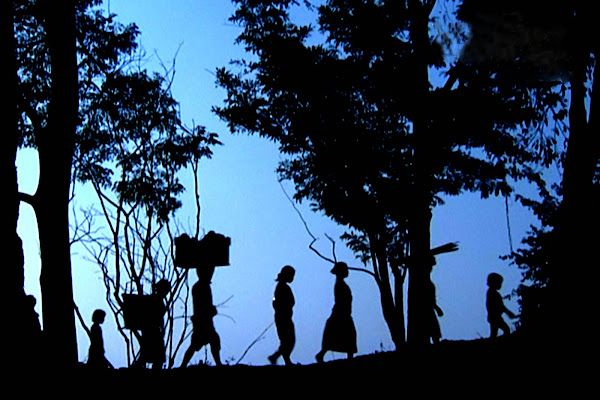
After the building a new dam twin rivers Raima and Saima overflew to their banks and submerged the village Bolombsa. The North – East Indian local people Yarwng, who have leaved here for thousands years had to move to another location and change their way of life. Karmati and Wikarai were to be married but, on the night before, the dam submerged the village and separate them forever. Time goes by and Karmati now married with Sukurai but still can’t forget her first love.
Film is screened in the Indian Panorama
( India, 2008, 95 min. )
Director: Joseph Pulinthanath sdb
Cast: Sushil Debbarma, Meena Debbarma, Nirmal Jamatia
After the building a new dam twin rivers Raima and Saima overflew to their banks and submerged the village Bolombsa. The North – East Indian local people Yarwng, who have leaved here for thousands years had to move to another location and change their way of life. Karmati and Wikarai were to be married but, on the night before, the dam submerged the village and separate them forever. Time goes by and Karmati now married with Sukurai but still can’t forget her first love.
Film is screened in the Indian Panorama
BOLLYWOOD NEWS
'Fashion' to be Showcased at the 31st Moscow International Film FestivalBy MovieTalkies.com, 23 June 2009
Bollywood is definitely going places and this time its Russia. The 31st Moscow International Film Festival will showcase Madhur Bhandarkar's 'Fashion' as one of their films in the Indian Panoram section. This is the first time that Bollywood films will be screened and Madhur has been invited to be a part of the prestigious festival and speak on Bollywood and films in India. On similar subject, Andrey Konchalovsky's 'Gloss' that released in Russia recently also shed light to the fashion world. Both of the makers believe in the same view that the world of fashion is like a web and one cannot survive without losing one's self respect. Other films in the Indian Panorama Programmes include Aamir Khan's 'Taare Zameen Par', Vishnuvardhan's 'Billa', Joseph Pulinthanath's 'Yarwng', Priyadarshan's 'Kanchivaram' and Suman Mukhapodhyay's 'Chaturganga'.
http://www.movietalkies.com/bollywoodnews/news.asp?NewsId=4026
Bollywood is definitely going places and this time its Russia. The 31st Moscow International Film Festival will showcase Madhur Bhandarkar's 'Fashion' as one of their films in the Indian Panoram section. This is the first time that Bollywood films will be screened and Madhur has been invited to be a part of the prestigious festival and speak on Bollywood and films in India. On similar subject, Andrey Konchalovsky's 'Gloss' that released in Russia recently also shed light to the fashion world. Both of the makers believe in the same view that the world of fashion is like a web and one cannot survive without losing one's self respect. Other films in the Indian Panorama Programmes include Aamir Khan's 'Taare Zameen Par', Vishnuvardhan's 'Billa', Joseph Pulinthanath's 'Yarwng', Priyadarshan's 'Kanchivaram' and Suman Mukhapodhyay's 'Chaturganga'.
http://www.movietalkies.com/bollywoodnews/news.asp?NewsId=4026
Fiesta of 14 quality films
CHANDAN SARMAH
FILM FESTIVAL
Meghalaya deputy chief minister Bindo Lanong at the film festival. Picture by Eastern Projections
It was heartening to see nationally acclaimed film directors and artistes attending the three-day film festival in Shilling from as far as Thiruvananthapuram, Mumbai, Bangalore, Chennai, New Delhi and the Northeast.
There were 14 films in the package — an equal number of full-length feature films and documentaries — selected from the Indian Panorama package of the International Film Festival of India held in Goa in November 2008. Of these, there were four films in English, two each in Hindi and Malayalam and one each in Assamese, Manipuri, Marathi, Tamil, Kannada and Kokborok.
The opening films of the festival were Yarwng (Kokborok) and Divided Colours of a Nation (English). While Yarwng is a sensitive story of the plight of the common man in the face of modernisation, the one in English is a 60-minute powerful documentary on the impact of reservation in India.
Produced by the Public Service Broadcasting Trust, the film shows that OBCs, SCs, STs and the less privileged make up 76 per cent of the Indian population but this majority has been ruled by the upper caste which constitutes only 12 per cent.
With authentic, complimentary visuals and sound cinematic language, director Umesh Aggarwal shows how reservation for the backward communities is currently the most contentious issue in the country.
Of the full-length feature films, the Marathi film, Valu (The Wild Bull), directed by Umesh Vinayak Kulkarni, stands out. Valu, the wild bull, is blamed for every single act of chaos and destruction in and around a small village. Gradually, the bull becomes a challenge for the leaders in power and for those interested in fringe benefits. In this complex yet hilarious allegory, Valu represents free will. The director’s finer sense of treatment touches the viewers with its sensitivity and insight.
It may be recalled that the first film society of the Northeast, the Shillong Cine Club, was established in 1962. But it became inactive since the seventies. One only hopes that the initiative of the directorate of film festivals in India works like a major inspiring force to resume the film society movement in this city.
http://www.telegraphindia.com/1090605/jsp/northeast/story_11060439.jsp
FILM FESTIVAL
Meghalaya deputy chief minister Bindo Lanong at the film festival. Picture by Eastern Projections
It was heartening to see nationally acclaimed film directors and artistes attending the three-day film festival in Shilling from as far as Thiruvananthapuram, Mumbai, Bangalore, Chennai, New Delhi and the Northeast.
There were 14 films in the package — an equal number of full-length feature films and documentaries — selected from the Indian Panorama package of the International Film Festival of India held in Goa in November 2008. Of these, there were four films in English, two each in Hindi and Malayalam and one each in Assamese, Manipuri, Marathi, Tamil, Kannada and Kokborok.
The opening films of the festival were Yarwng (Kokborok) and Divided Colours of a Nation (English). While Yarwng is a sensitive story of the plight of the common man in the face of modernisation, the one in English is a 60-minute powerful documentary on the impact of reservation in India.
Produced by the Public Service Broadcasting Trust, the film shows that OBCs, SCs, STs and the less privileged make up 76 per cent of the Indian population but this majority has been ruled by the upper caste which constitutes only 12 per cent.
With authentic, complimentary visuals and sound cinematic language, director Umesh Aggarwal shows how reservation for the backward communities is currently the most contentious issue in the country.
Of the full-length feature films, the Marathi film, Valu (The Wild Bull), directed by Umesh Vinayak Kulkarni, stands out. Valu, the wild bull, is blamed for every single act of chaos and destruction in and around a small village. Gradually, the bull becomes a challenge for the leaders in power and for those interested in fringe benefits. In this complex yet hilarious allegory, Valu represents free will. The director’s finer sense of treatment touches the viewers with its sensitivity and insight.
It may be recalled that the first film society of the Northeast, the Shillong Cine Club, was established in 1962. But it became inactive since the seventies. One only hopes that the initiative of the directorate of film festivals in India works like a major inspiring force to resume the film society movement in this city.
http://www.telegraphindia.com/1090605/jsp/northeast/story_11060439.jsp
Tripura film screened in New York
AGARTALA, June 12: A feature film on internal displacement in Tripura in Kokborok (tribal language) with English subtitle was screened in New York today.
Previously, the film had won a special jury award at the seventh Asian film festival in Mumbai, Yarwng (Root). Director of the film Joseph Pulinthanath said that Yarwng got an overwhelming appreciation at the Museum of Modern Art in New York which was scheduled to be screened at Stuttgart in Europe and at Brisbane in Australia in July.
He said Yarwng was selected for the overseas premiere at prestigious film events in US, Europe and Australia despite culture and language barrier.
The film has already been to more than 20 International festivals within the country, including the IFFI in Goa last year.
“The film is about how the gathering waters of a just-completed hydel project doomed the future of the villagers of the particular area besides, Karmati and Wakhirai,” the producer K J Joseph said.
The film also essays the life of Chokdri (village headman), Ochai (Village Priest) and Agurai (Shopkeeper).
About 80,000 tribals were ousted in 1976 when Dumbur hydel project was commissioned with a 30-metre high gravity dam constructed across the river Gumati about 3.5 km upstream of south Tripura, which submerged a valley area of 46.34 sq km for generating 8.60 megawatts of power from an installed capacity of 10 megawatt.
Unfortunately, about 60 per cent of the oustees have not yet received any rehabilitation from the government and most of them were settled in the hill ranges.
The story of Yarwng was set in the backdrop of the Gumati hydel project and projects the trauma of displacement and its aftermath that unfolds in the lives of the characters.
The film was based on the real narratives of the people, said Meena Debbarmma, the lead female character of the film. (Agencies)
http://www.sentinelassam.com/northeast.php?sec=2&subsec=9&id=13389&dtP=2009-06-13&ppr=1
Previously, the film had won a special jury award at the seventh Asian film festival in Mumbai, Yarwng (Root). Director of the film Joseph Pulinthanath said that Yarwng got an overwhelming appreciation at the Museum of Modern Art in New York which was scheduled to be screened at Stuttgart in Europe and at Brisbane in Australia in July.
He said Yarwng was selected for the overseas premiere at prestigious film events in US, Europe and Australia despite culture and language barrier.
The film has already been to more than 20 International festivals within the country, including the IFFI in Goa last year.
“The film is about how the gathering waters of a just-completed hydel project doomed the future of the villagers of the particular area besides, Karmati and Wakhirai,” the producer K J Joseph said.
The film also essays the life of Chokdri (village headman), Ochai (Village Priest) and Agurai (Shopkeeper).
About 80,000 tribals were ousted in 1976 when Dumbur hydel project was commissioned with a 30-metre high gravity dam constructed across the river Gumati about 3.5 km upstream of south Tripura, which submerged a valley area of 46.34 sq km for generating 8.60 megawatts of power from an installed capacity of 10 megawatt.
Unfortunately, about 60 per cent of the oustees have not yet received any rehabilitation from the government and most of them were settled in the hill ranges.
The story of Yarwng was set in the backdrop of the Gumati hydel project and projects the trauma of displacement and its aftermath that unfolds in the lives of the characters.
The film was based on the real narratives of the people, said Meena Debbarmma, the lead female character of the film. (Agencies)
http://www.sentinelassam.com/northeast.php?sec=2&subsec=9&id=13389&dtP=2009-06-13&ppr=1
Film examines problem of displacement in Tripura
Tue Nov 25, 2008 1:34am IST
PANAJI, India (Reuters) - A new film, one of the first to be made in the Kokborok language of Tripura, puts the spotlight on tribal displacement in the north-eastern state.
'Yarwng', screened at the International Film Festival of India (IFFI) on Monday, tells the story of a man and woman displaced when their village is flooded just hours before they were to get married.
"The film deals with the real problem of displacement that has occurred in Tripura due to the building of the Dumbur dam," director Joseph Pullinthananth told reporters at the film festival in Goa, where 'Yarwng' was the opening film in the Indian Panorama section.
"We estimate that at least 30,000 to 40,000 people have been displaced and we made this film for every person who has ever been dispossessed."
Interestingly, the film's director and his crew are from Kerala while the actors in 'Yarwng' were locals from Tripura. But language was the least of their worries during the making of the film.
"We camped in the deepest interiors and the most backward tribal district of Tripura, which are most affected by the dam," Pullinthananth said.
Shooting for the film, partially funded by the Catholic Church in India, was completed in a month.
http://in.reuters.com/article/topNews/idINIndia-36671620081124
PANAJI, India (Reuters) - A new film, one of the first to be made in the Kokborok language of Tripura, puts the spotlight on tribal displacement in the north-eastern state.
'Yarwng', screened at the International Film Festival of India (IFFI) on Monday, tells the story of a man and woman displaced when their village is flooded just hours before they were to get married.
"The film deals with the real problem of displacement that has occurred in Tripura due to the building of the Dumbur dam," director Joseph Pullinthananth told reporters at the film festival in Goa, where 'Yarwng' was the opening film in the Indian Panorama section.
"We estimate that at least 30,000 to 40,000 people have been displaced and we made this film for every person who has ever been dispossessed."
Interestingly, the film's director and his crew are from Kerala while the actors in 'Yarwng' were locals from Tripura. But language was the least of their worries during the making of the film.
"We camped in the deepest interiors and the most backward tribal district of Tripura, which are most affected by the dam," Pullinthananth said.
Shooting for the film, partially funded by the Catholic Church in India, was completed in a month.
http://in.reuters.com/article/topNews/idINIndia-36671620081124
Yarwng (Roots); New York MOMA Synopsis
2008. India. Written and directed by Father Joseph Pulinthanath. The brutal and bitter upheaval of tribal peoples in northeast India, their fertile riverside villages submerged by the construction of a hydroelectric dam in the 1970s, forms the backdrop to this unresolved love story between a young man and woman who are driven apart on the day they are meant to be married. Using nonprofessional actors (who relive their own traumatic experiences on screen) and depicting the landscape of Tripura, the tribal language of Kokborok, and a fascinating culture rarely captured on film and almost completely unknown even within India, Pulinthanath, a Catholic priest and a native of Kerala, creates an almost timeless fable about the clash of civilizations, and the forces of modernity that threaten to obliterate tribal life. North American premiere. In Kokborok; English subtitles. 90 min.
http://www.moma.org/visit/calendar/film_screenings/6743
http://www.moma.org/visit/calendar/film_screenings/6743
Subscribe to:
Posts (Atom)